
We’ll reach out within one business day.

Transcranial Magnetic Stimulation (TMS) uses gentle, MRI-strength magnetic pulses to stimulate specific brain networks involved in mood. There’s no anesthesia, no surgery, and no systemic medication - most people return to normal activities right after sessions.
- A magnetic coil placed on the scalp delivers brief electromagnetic pulses that pass through the skull and induce tiny electrical currents in targeted brain tissue.
- By adjusting where and how we stimulate, TMS can increase activity in underactive mood circuits (common in depression) or regulate overactive circuits (relevant to other conditions).
- Common protocols include excitatory high-frequency (e.g., 10 Hz) and inhibitory low-frequency (e.g., 1 Hz), as well as iTBS (intermittent theta-burst stimulation), a very brief pattern used in accelerated courses.
What TMS Actually Does
Plain language: TMS uses a magnetic field to nudge brain cells so mood networks communicate more effectively again.
Evaluation & Safety Screen
We review your history, goals, and any contraindications (e.g., certain metal implants, seizure history) to confirm TMS is appropriate and safe.
Mapping & Motor Threshold
We find your motor threshold (i.e, the minimum intensity that activates a tiny hand muscle) to personalize the amount of electromagnetic stimulation for your body. We then position the coil over the brain region that gives you the best chance of symptom relief.
- For depressive symptoms, the common target is the dorsolateral prefrontal cortex
- For OCD, the common target is the medial prefrontal cortex and the anterior cingulate cortex
Your Treatment Session
You may feel tapping on the scalp during short periods of pulses, though this usually dissipates after the first few sessions. Sessions are comfortable and med-free; you can read or relax and drive afterward.
We’ll help you compare standard vs. accelerated based on your goals, schedule, and coverage. Read more:
Compare Treatments
Standard TMS
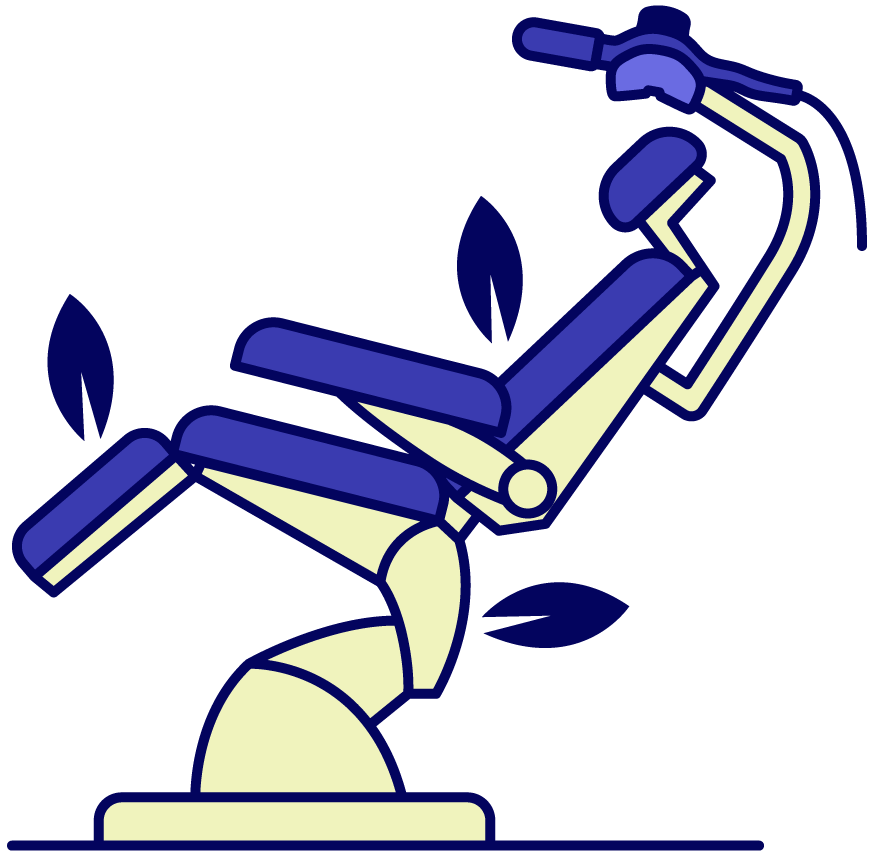
- Typically, one session per weekday for several weeks (often 36 sessions, with a short taper).
- Session length varies by protocol - many typical courses run for 20 minutes, while iTBS can be as short as 3 minutes per session.
- iTBS refers to a specialized electromagnetic pulse used in some TMS protocols, particularly in accelerated schedules (see below). It delivers shorter pulses at a higher frequency.
Accelerated options (ask us)
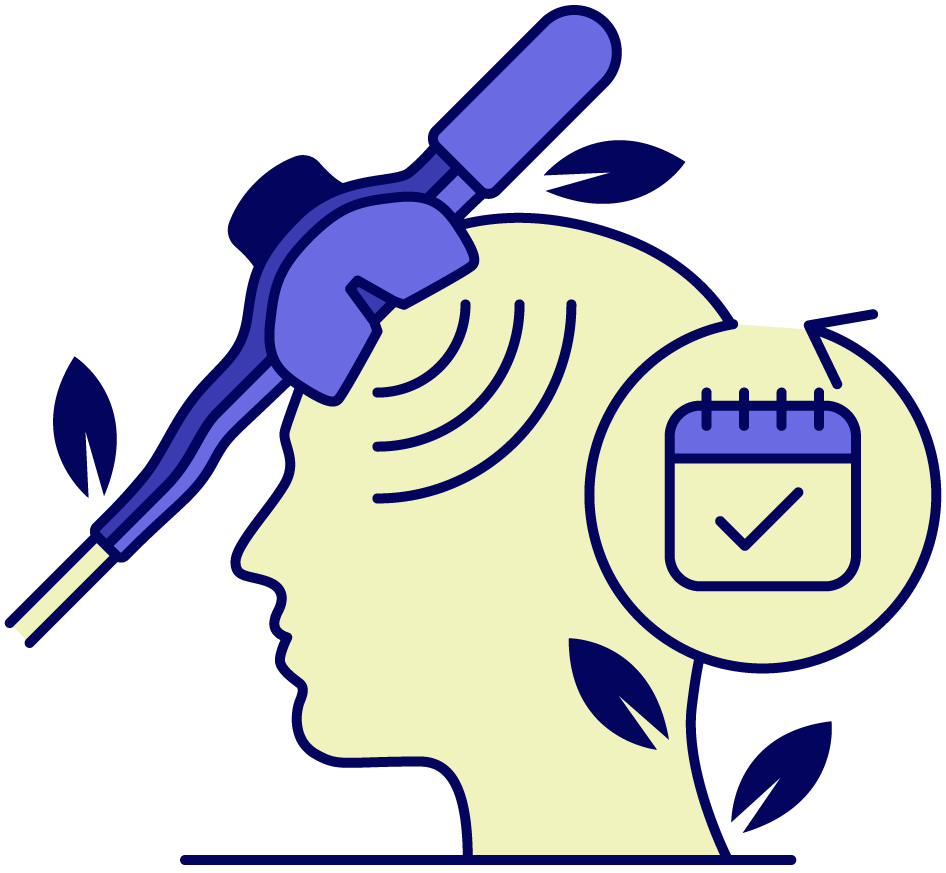
- Same technology, faster schedule: multiple short sessions per day separated by rest periods, e.g., 50 sessions across 5 days, or a single-day (20 mini-sessions) option when appropriate.
- For the single-day option, D-cyclerosine is administered adjunctively to enhance the effects of TMS
Safety & Side Effects
TMS is well-tolerated for most people. The most common effects are temporary scalp sensitivity or mild headache, especially early on; these typically lessen and are manageable with small adjustments or OTC analgesics. Rare risks are reviewed during your evaluation.
Screening helps ensure safety (e.g., considering seizure history or metal/ferromagnetic implants). You remain awake, no anesthesia is used, and you may return to normal activities after sessions.
Who TMS May Help
TMS is used for adults with depression that hasn’t fully responded to therapy and/or medications. If you’re unsure where you fit, we’ll review your history and personalize a plan.
Read More:
Is TMS Right For Me?
Is TMS the same as ECT?
No. TMS uses focal magnetic pulses while you’re awake; ECT uses a brief, controlled seizure under anesthesia. TMS does not require anesthesia or recovery time. Read More: TMS Pros & Cons
Will I feel it?
Most people describe a tapping sensation on the scalp. Comfort improves over the first few sessions; we can adjust position and intensity.
How soon might I notice changes?
Every person is different. Many who respond to standard TMS begin to notice shifts within 2–4 weeks, with benefits building over the full course. Accelerated schedules can show changes during or shortly after the treatment window. Read More: Accelerated TMS
What if I’m not sure I can commit to the schedule?
Talk to us about Accelerated TMS or a hybrid schedule; we’ll help you balance efficacy and logistics.
Can I keep my current medications or therapy?
Often yes. We coordinate with you on whether to continue, adjust, or simplify meds. Concurrent therapy can complement TMS well.
Clear, evidence-based guides to help you choose the right path at Redbud.
Is TMS Right for Me?
A short self-assessment to help you explore whether TMS may be a good option for you.
Compare Treatments
Side-by-side look at TMS, accelerated TMS, Spravato, medication, and therapy, benefits, risks, and who each fits best.
Pros & Cons
A clear, side-by-side breakdown of our treatments so you can decide with confidence.
We keep costs simple so you can focus on getting better.
Insurance support: We verify your benefits and handle prior authorization.
Transparent self-pay: Written estimates before you start, no surprises.
Flexible ways to pay: Simple payment options, third-party financing may be available.
Spravato note: Out-of-pocket varies by plan; we confirm individually.
Talk to a Clinician
Call us at 540-212-9525 or complete the form below.
Contact Us
Thank you for contacting us.
We will get back to you as soon as possible.
We will get back to you as soon as possible.
Oops, there was an error sending your message.
Please try again later.
Please try again later.


We’ll help you explore if TMS, Spravato, medication, or therapy is the next best step.
Get answers about eligibility, coverage, and cost.